Type
Checkpoint
Publish Time
2026-04-08
Base Model
Qwen-image2.0
Model Parameters
clip_skip:1
Training Parameters
Epochs:1
Steps:0

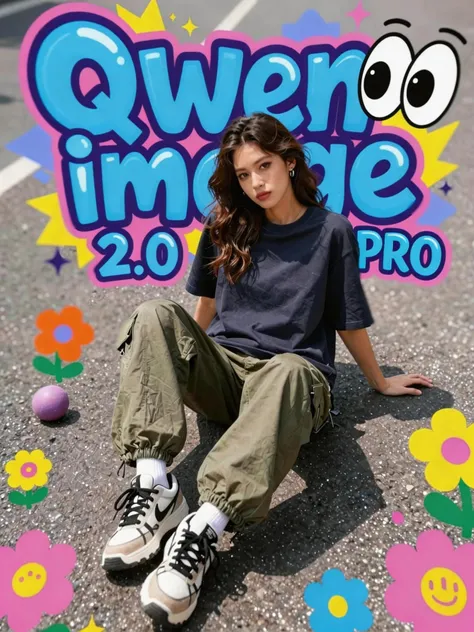
Qwen-Image-2.0 is the next-generation image foundation model. It marks a major step forward by unifying text-to-image generation and image editing into one single model, so you can create and modify visuals with a consistent "brain" instead of switching between separate pipelines.
Qwen Image 2.0 is the best as a design-forward, prompt-faithful, high-resolution creator—especially strong when your workflow involves text in images, structured layouts, or precise edits.
l Model size: 7B parameters (a big reduction from the previous ~20B generation, while maintaining or exceeding performance in many areas).
l Native resolution: up to 2K.
l Prompt length: up to 1,000 tokens (great for long, detailed instructions like posters/infographics).
l Architecture: unified generation + editing (create + modify in one model).
1) Professional-grade text rendering
Text in images is historically one of the hardest problems for image generators. Qwen-Image-2.0 is specifically noted for producing legible, stylistically correct typography and handling complex, structured layouts such as:
l PPT-style slides.
l Movie posters.
l Infographics.
l Calendars.
l Comics / manga panels.
If your output needs readable words rather than "almost-text," this is one of the model's biggest advantages.
2) One model for both generation and editing (better consistency)
Instead of treating "create" and "edit" as two separate tools, Qwen Image 2.0 uses the same model to handle:
l Text-to-image from scratch.
l Precise edits (local changes, object add/, style transfer).
l Semantic edits (change meaning/concept) + appearance edits.
l Stronger identity / scene consistency across edits.
This is especially useful for iterative workflows: generate → tweak → refine → restyle, without losing the core structure.
3) High photorealism and detail fidelity
The model is described as excelling in:
l Realistic portraits.
l Product photography.
l Textures, lighting, clothing details.
l Group photo and outfit manipulation.
4) Strong prompt adherence for complex scenes
With long-prompt support and strong scene understanding, it handles multi-constraint requests like:
l Composition + lighting + camera angle.
l Multiple characters and consistent appearance.
l Detailed art direction and styling.
5) Efficiency: smaller model, fast inference
At 7B, it's positioned as relatively efficient—faster inference than 20B+ predecessors—while still competitive in quality, including in blind tests.
Design & layout-heavy creation
Use Qwen Image 2.0 when you need images that behave like "designed assets," not just pretty pictures:
l Posters, flyers, promo banners.
l Infographic-style visuals.
l Comics with readable dialogue.
Photoreal portrait + product workflows
l Portraits with clean skin texture, natural lighting.
l Fashion/outfit swaps while keeping identity.
l Product shots with realistic materials and reflections.
Editing that stays consistent
l /add objects without "breaking" the scene.
l Change clothes, hairstyles, background theme.
l Style transfer while keeping structure and subject consistency.
For posters / infographics / layouts
Because the model supports very long prompts, treat your prompt like a creative brief:
l Canvas: aspect ratio + resolution (e.g., 2K).
l Layout: header/subheader/body areas, alignment, margins.
l Typography: language, font vibe (bold, minimal, retro), hierarchy.
l Exact text: provide the words exactly as they should appear.
l Design style: modern, cyberpunk, minimalist, corporate, etc.
For edits
Be about:
l What must NOT change (identity, pose, background structure).
l What changes (replace outfit, object, change lighting).
This aligns with the model's unified editing strengths and consistency.